ExxonMobil WellWise: Well Cost Estimation & Performance Transparency
From ad‑hoc tools to a single source of truth
The Client Challenge
Drilling and Cost Engineers are required to create detailed estimates before the organization will provide an approval for expenditure for all new drilling and subsurface jobs. ExxonMobil engaged Fjord Design Studios to analyze the current process to develop a product that allows users to make use of historical data, tribal knowledge, and changing landscapes to create accurate estimates that optimize investments by balancing risk to maximize performance.
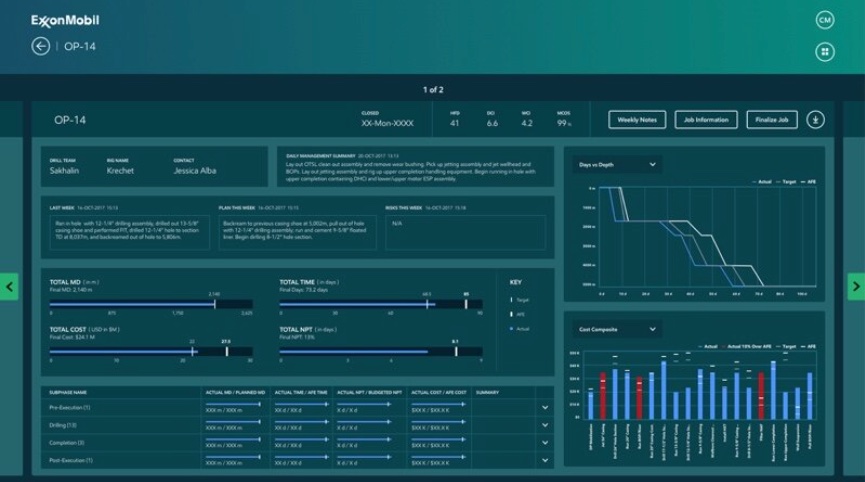
In addition to the estimate process, we were asked to address monitoring and reporting of job performance in real-time. Our goal was to encourage data standardization and to create clean historical references that provided organization-wide budget and performance transparency.
Reducing administrative drag and elevating engineering focus
To reduce administrative tasks and increase efficiencies across the organization, the product fostered:
-
>
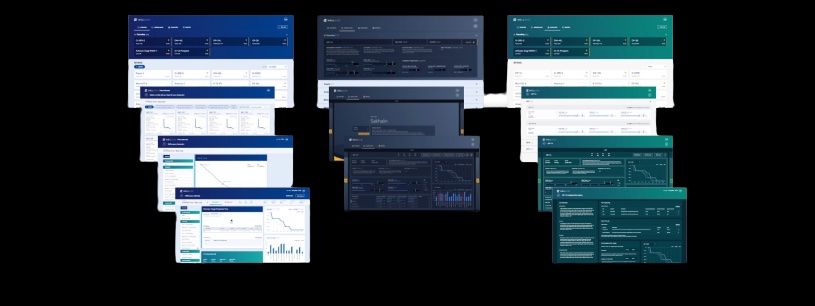
Democratization of data: Users base estimates and designs on previous job information, historically stranded on desktops. We provided access to information for over 18,000 historical jobs, sortable by country, date, and other defining attributes.
>
Rapid creation & iteration: A streamlined workflow allows for the rapid creation of speculated designs and iterations of alternate solutions. Drag and drop functionality, duplication capabilities, and manual adjustments let the user have complete control of their estimate
>
Job comparison: Flexibility to compare different designs in a single view allows engineers and their peers to evaluate the potential ROI for each job.
>
Progressive reporting: Providing quantitative and qualitative information throughout the life of the job in a centralized platform simplifies not only the daily reporting process, but end of job reporting as well.
Understanding the real constraints and opportunities
Discovery
Through exhaustive user interviews and in-depth analysis of processes and tools, the team developed an understanding of the problems we’d need to solve for, including:
-
>A patchwork of disparate and overlapping tools creating significant workflow inefficiencies.
>Manual processes and time-consuming tasks that took engineers away from organizational improvement and high value activities.
>Knowledge and experience that was not effectively transferred in the current process, with creativity and ingenuity being misplaced on the creation of ad-hoc tools to meet needs.
>Delivery of cost estimates took a disproportionate amount of time and effort; effort that could be better spent addressing other, value-add, bottom line impacting activities.
Culture, capital, and capability — all in one product
The Results
By keeping communication open, and consistently pushing innovative design thinking, the final product has the potential to make a big impact throughout the organization, including:
-
>
Culture shift: By focusing on transparency and knowledge sharing, communication barriers are broken and all employees have insight into historical and real-time performance data to better inform decision making.
>
Investment optimization: Because of risk adverse budgeting, millions of dollars were wrapped up for the entirety of a fiscal year. creating estimates using real performance data could free up nearly $500M for other investments.
>
Employee efficiency: Drilling engineer cost estimating workload is reduced at the equivalent of 5-10 FTEs, allowing focus on high value activities.
>
Streamlining technology: Replaces 10 individual tools/DBs currently in use, provides a single touchpoint for data access, and utilizes existing cloud infrastructure to decrease cost and increase speed.
>
Data hygiene: Defining company-wide standards improve efficiency and impact of historical data.