Intelligence across the lifecycle
Across vastly expanded capabilities, WellTender 2.0 incorporates multiple forms of artificial intelligence. Unsupervised learning is employed in analyzing maintenance and historical production, surfacing patterns and opportunities that weren’t visible in manual reports.
Computer vision is utilized for well information gathering and transmission, eliminating the need for every site employee to spend hours each week traveling to a central office, scanning, and submitting documents to a central repository.
Natural Language Processing (NLP) and sentiment analysis are leveraged to review user comments for efficacy, coupled with user‑driven supervised learning to keep the system tuned to the realities of field work.
Right work, right person, right route
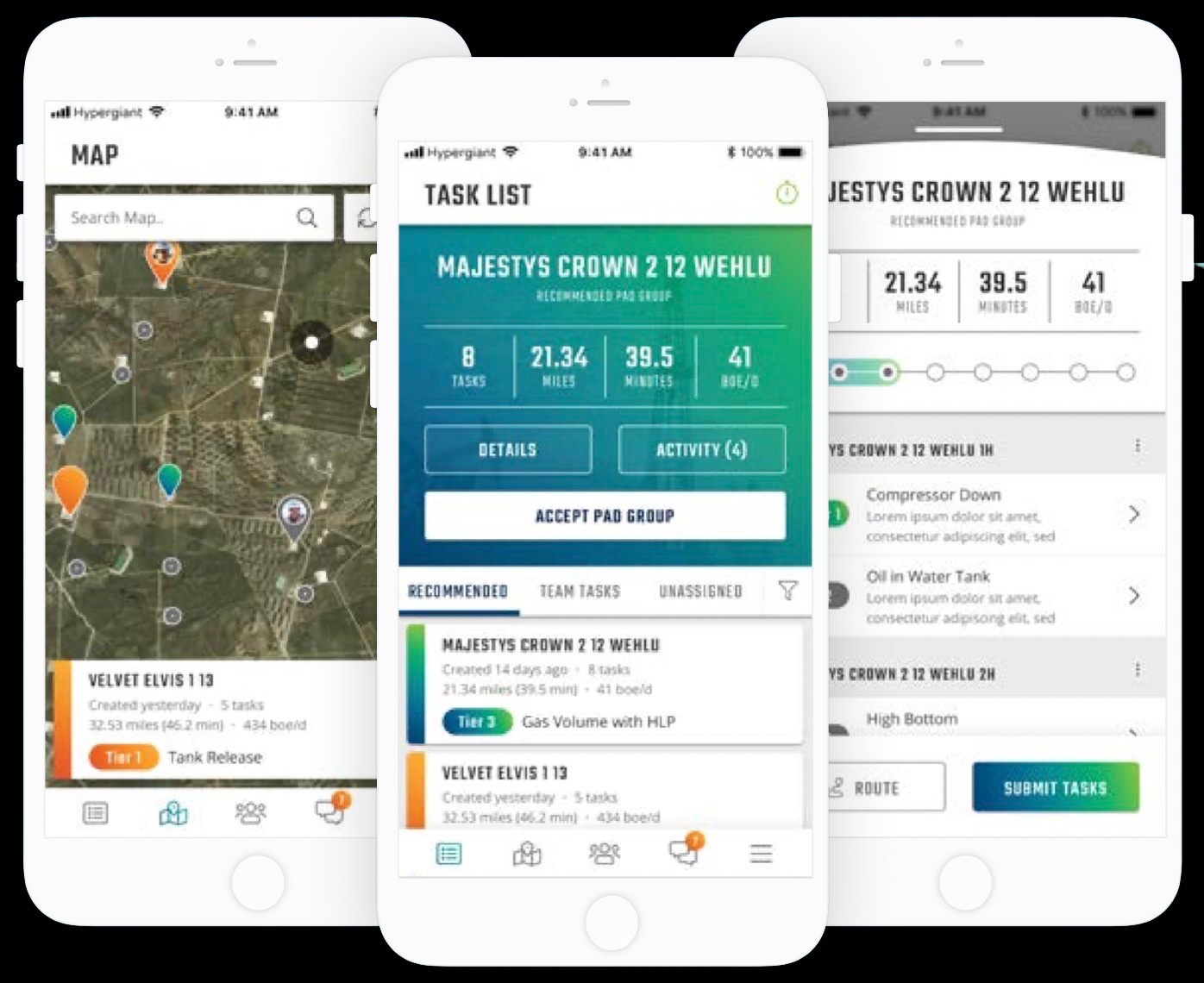
Algorithmic work‑item matching ensures that the most appropriate employee addresses site challenges according to their aptitudes, location, and past performance. This improves both effectiveness in the field and perceived fairness of work assignment.
Most significantly, AI‑driven routing and telemetry ensure that site issues are addressed via the most efficient travel pathway. The result: fewer wasted miles, faster resolution times, and direct daily savings at scale across five regions.
Finally, the Intelligent Incentives program tied together all of these capabilities into a format that was intuitive, graceful, transparent, and user‑focused—making system behavior visible, and giving crews clear line‑of‑sight into how their performance connected to outcomes.